Archived destinations
UK archive


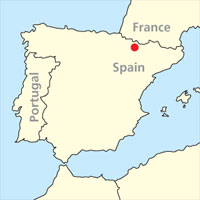
Spring in the Spanish Pyrenees
29 April – 6 May 2025
Plus a steppe and a wetland
This late addition to Honeyguide's programme for spring 2025 takes advantage of availability at our regular base at Casa Sarasa in Berdún and our host there, Peter Rich. This follows directly from the enthusiasm to return from group members of our holiday here in October 2024.
Olite, Bardenas (steppe) and Pitillas lagoon
A new element in this holiday is two nights in the ancient town of Olite, situated part way between Bilbao airport and our main base at Casa Sarasa, Berdún in the Spanish Pyrenees. This is partly to manage capacity at Casa Sarasa though also brings us close to two interesting wildlife areas. The first of these is steppe country at Bardenas. The Spanish steppes (as also at SEO’s reserve at Belchite) – are a special and scarce habitat, with striking looking mesetas (tablelands). Dry country birds here include various larks including Dupont's lark– very scarce and always elusive – sandgrouse and stone-curlew.
We will also go to a wetland, Laguna de Pitillas – which was much enjoyed by last October’s group, Honeyguide’s first group to visit here. We can expect a range of wildfowl, birds of prey, heron species and spring bird song.
In Olite we stay at Hotel Merindad de Olite on the edge of the historical part of the town, with fine views of the castle.

Pitillas lagoon, in October 2024, from the reserve's observatory.
Berdún and the Spanish Pyrenees
A stunning landscape and a wealth of wildlife make the Spanish Pyrenees attractive in any season. In spring, with vultures soaring, birds singing and flowers in bloom, it’s a wildlife experience difficult to top anywhere in Europe.
Raptors often steal the show. The foothills of the Pyrenees, where we are based, are acknowledged as having Europe’s highest density of birds of prey. Red and black kites feed in the river valleys. Short-toed eagles hover as they search for snakes and lizards; booted eagles are regular too. There are three vulture species: griffons are easily the commonest and increasing, Egyptian vultures are getting scarcer here and everywhere. We are at the heart of Europe’s stronghold for the rare bearded vulture (also called lammergeier).
The scenery is dramatic with the constant backdrop of snow-topped mountains. There are deep gorges that attract griffon vultures, alpine swifts and crag martins. High pastures have gentians and other early alpine flowers, and on lower slopes asphodels and early spider orchids are among the species to be found.
Berdún itself – host to Honeyguide holidays for more than 30 years – is a charming, fortified village perched on a hilltop in the Pyrenean foothills. Our base is Casa Sarasa, on this holiday for five nights, where Peter Rich and Melanie Hallam and their team offer a warm welcome and fine food. The Pyrenees may sound quite strenuous, but our itinerary is actually fairly relaxed. Anyone reasonably fit will have no trouble keeping up.
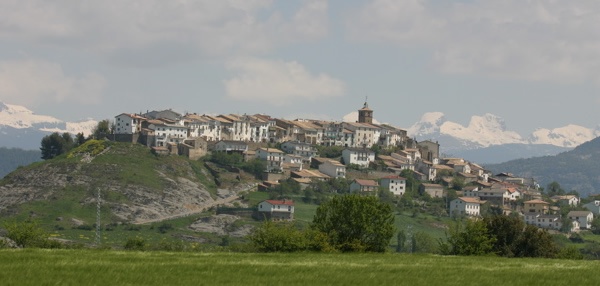
Berdún (Chris Gibson)
Birds
Those mentioned above plus golden eagle, bee-eater, hoopoe, crested lark, golden oriole, black-bellied dipper, Cetti’s, subalpine and Sardinian warblers, rock sparrow, spotless starling, chough, blue rock thrush, citril finch and many more.
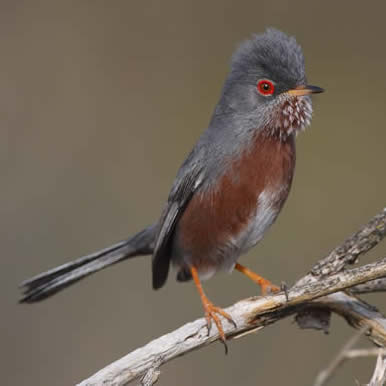
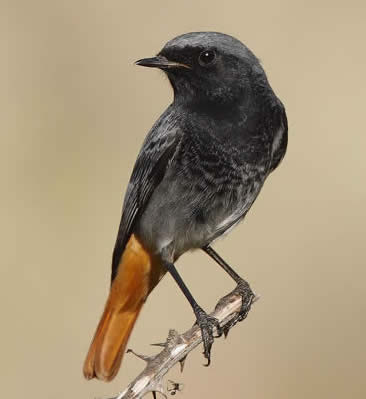
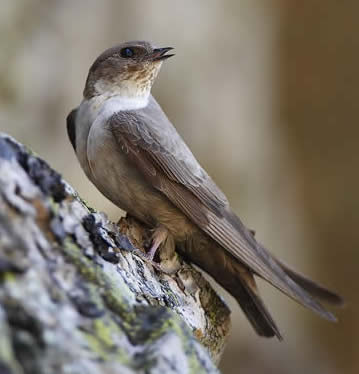
Dartford warbler, black redstart, crag martin (Steve Fletcher).
Flowers
Lady and elder-flowered orchids, hepatica, amelanchier, trumpet and spring gentians, beautiful flax, wild daffodil, rush-leaved narcissus, tassel hyacinth, Pyrenean saxifrage, petrocoptis to name just a few.
Other wildlife
Mammals could include alpine marmot and isard – Pyrenean chamois – at the high tops, and red squirrel. Butterflies include Cleopatra, scarce swallowtail, Moroccan orange-tip and Spanish festoon. Spanish moon and giant peacock moths are often seen.
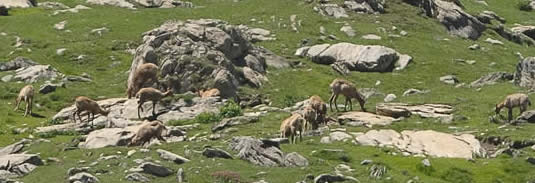
Isards (Ivan Nethercoat)
Holiday details
Our trips take us to the monastery and pine woods at St Juan de la Peña, the high Pyrenees at Aísa or Portalet, the sandstone cliffs at Riglos and the gorge at Lumbier. Local exploration is equally rewarding to the rivers Veral and Aragón.
Two nights at Hotel Merindad de Olite in Olite and five nights at Casa Sarasa.
Price: £1,750 per person in twin room for a full week (Tuesday to Tuesday).
Single room supplement: £180
Flights: Scheduled Vueling flights London Gatwick (South Terminal) to Bilbao.
29 April: VY6632 depart London Gatwick 09:25 arrive Bilbao 12:25.
06 May: VY6308 depart Bilbao 14:40 arrive Gatwick 15:35.
Deposit: £400
Group size: maximum of 7 (one minibus), minimum of 4.
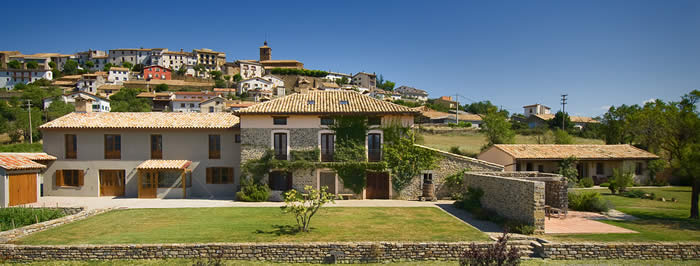
Our holiday base at Casa Sarasa in Berdún
Leader
Peter Rich is our host at Casa Sarasa and is very knowledgeable about the Spanish Pyrenees, its wildlife, culture and history.
Conservation project
SUPPORTING
|
The Sociedad Española de Ornitología (Spanish Ornithological Society) manages 1600 acres of steppe, one of the most threatened bird habitats both here in the Aragón region and in Europe. Dupont’s and lesser short-toed larks, pin-tailed and black-bellied sandgrouse and stone-curlews benefit from the establishment of this reserve at Belchite, near Zaragoza. |

For prices, see Holiday Details at the bottom of the page.
 |
FCO travel advice for Spain here. |
Holiday reports
Spanish Pyrenees April-May
Spanish Pyrenees October 2024
May 2018 holiday report here.
Spanish Pyrenees holiday report June 2016.
Spanish Pyrenees holiday report 2014.
There are many more Honeyguide holiday reports from the Spanish Pyrenees dating back to 1991 on our holiday reports web pages.
Berdún and Casa Sarasa
See Berdún and Casa Sarasa on YouTube here and a superb promotional video for the area here. Read two special 'moments' from Berdún here.
Our Berdún web page has more ideas about a holiday here ... for example, an autumn walking holiday on part of the Camino de Santiago.
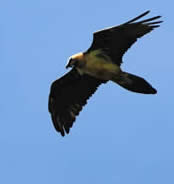
Bearded vulture (Ivan Nethercoat)
Spanish Pyrenees photos
Gallery of photos, by Chris Gibson.
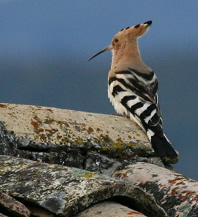
A hoopoe in Berdún (Chris Gibson)

Scarce swallowtail (CG)

Spring gentians (CG)
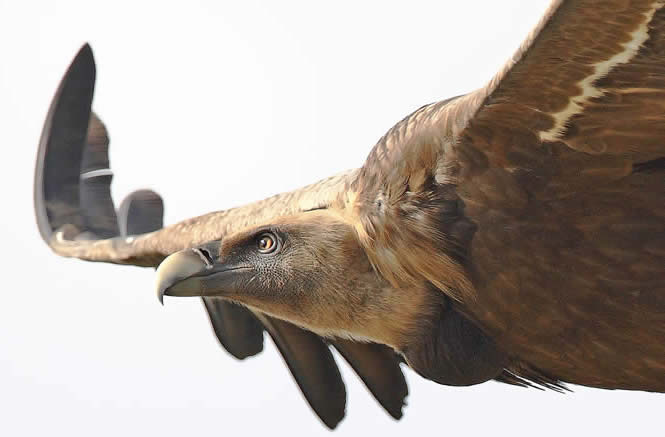
Griffon vulture (Steve Fletcher)
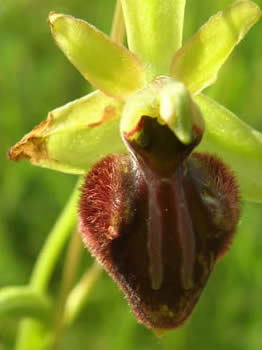
Early spider orchid

Ramonda (Ivan Nethercoat)
We know they are there, but our experience is that wallcreepers can be tricky to find in the Spanish Pyrenees. Read more about wallcreepers here.

Recommended reading: Crossbill Guide to Spanish Pyrenees and the Steppes of Huesca.
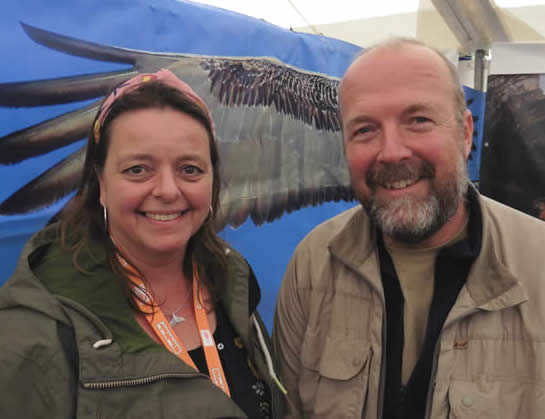
Peter and Melanie from Casa Sarasa, pictured at the Birdfair, August 2019.

