Archived destinations
UK archive


Poland 12 – 20 May 2018
Biebrza Marshes and Białowieża Forest
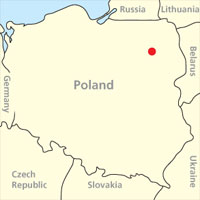
Biebrza Marshes form a formidable but beautiful barrier between solid land in northeast Poland and Belarus. The primeval Białowieża Forest also lies along that same international border, and together they form one of Europe's greatest natural experiences.
The River Biebrza consists of some 100 miles of meanders and ox-bows within its basin of about 3,000 square miles. Winter is long-lasting, while summers are short and rich. Floods of unpredictable length can last into early summer.
These produce habitats ranging from swampy, impenetrable forest, much beloved by breeding cranes and black storks, to huge grasslands, covered with millions of marsh marigolds in spring with nearby water hosting many breeding marsh terns. The area supports many of the 50,000 pairs of white storks that breed in Poland. The evening murmuring of fire-bellied toads is one of the more memorable sounds, especially if accompanied by the bugling of cranes and the rasping of corncrakes.
Białowieża too has its wetlands but is most admired for the majesty of its forest. Here, famously, several hundred European bison roam. Beavers abound – Bobra in Polish, which was the original name of Biebrza – and are sometimes even seen from the bridge in the village of Białowieża.
One piece of the forest that once covered much of central Europe, Białowieża was originally preserved for private hunting by Polish kings and Russian Tsars. Modern protection is a National Park and UNESCO World Heritage Site. Mixed oak, lime and hornbeam is the commonest of the six main forest types in the Polish part of Białowieża; in Belarus there is more coniferous forest. Never felled, with giant trees and large amounts dead wood, both standing and fallen, this unruly wilderness seems to invite architectural similes. Cathedral-like in the more spacious parts, it is dense in others. For many the highlight of any visit is to enjoy a walk with a local expert guide in this ancient forest.
Birds
Spring brings strutting hordes of ruffs to the marshes together with dancing brigades of white-winged and black terns. Thrush nightingale, great reed warbler and white-spotted bluethroat arrive early and sing delightfully often from exposed positions. Soon they are joined by scarlet rosefinch, red-breasted flycatcher, aquatic, river and barred warblers together with the fluting golden oriole.
Raptors such as white-tailed eagle and Montagu's harrier show frequently, while penduline tits bring extra delight by building much-admired nests. Eight species of woodpecker are present in Białowieża foest, including black and white-backed. Their holes provide homes to flycatchers, starlings and pygmy owls. Other woodland birds include lesser spotted eagle, nutcracker and hazel hen; red-backed shrikes can be common in surrounding fields and meadows.
Mammals
As everywhere, mammals can be difficult to see, though in Biebrza and Białowieża the chance of sightings are quite good. Elks can usually be seen grazing or loping in the marsh. Wild boars may be surprisingly obvious; there are many hares, but no rabbits. Pine marten is possible, as are red squirrels. Tarpan or Konik horses, now frequent inhabitants of British nature reserves, are being bred to revive a species close to the original wild horse of Europe.
Other wildlife
Marsh, edible and green tree frogs join the fire-bellied and grey toads in suitable wetlands. Dragonflies are not numerous in May but include Siberian winter and white-legged damselflies. Among early butterflies, Camberwell beauty and large tortoiseshell are popular with British visitors.
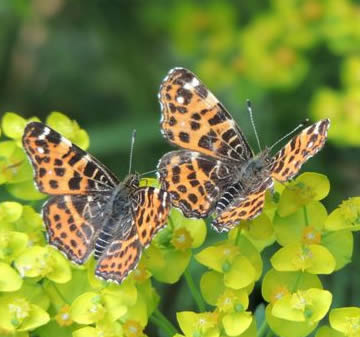
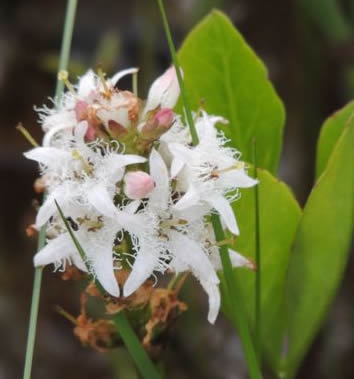
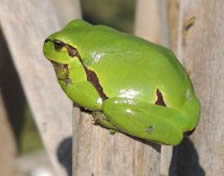
Map butterflies, bogbean and tree frog (Sue Rowell). All photographed
on the holiday in May 2016.
Plants
Biebrza holds a multitude of water-loving plants such as water soldier, sundew, yellow marsh saxifrage and a range of marsh orchids. Trees are much admired in Białowieża with certain individuals famous for their size. On the woodland floor there are hepatica, anemones, lungwort, sweet woodruff and carpets of ransoms. A curious mix of northern, alpine and eastern species can include long-leaved speedwell, bastard balm, spiked rampion and, we hope, lady's slipper orchid.
Holiday details
Five nights at Biebrza Marshes, moving to Białowieża for the remaining three nights of the holiday (or possibly the other way round). In Białowieża we will stay in the village, close to the Tsar's Palace Park. In Biebrza we stay close to Goniaddz, surrounded by meadows and woods.
Price: £1,550 per person in a twin room for eight nights (Saturday to Sunday)
Single room supplement: £130.
En suite facilities
Flights: scheduled Wizz Air flights, London Luton to Warsaw. There may also be a flight with BA from London Heathrow with suitable times.
Deposit: £300
Maximum number: 14
Main leader
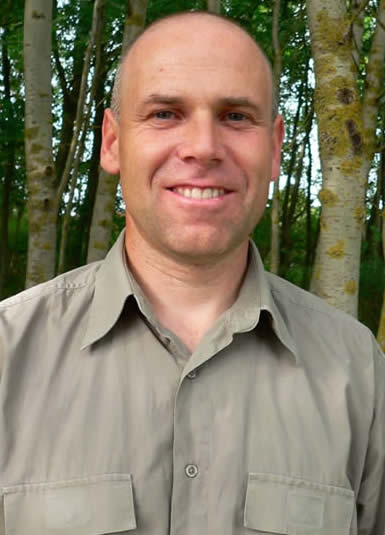
Artur Wiatr is a wildlife enthusiast involved in nature protection and ecotourism development within the Biebrza River valley. He works both for the Biebrza National Park and since 1998 as a holiday leader. He’s a licensed guide and is co-author of a pocket guidebook on Biebrza National Park.
Read more about Artur and his agency Biebrza Explorer here. It's not a holiday idea - at present! - but you might enjoy some nature notes about winter in Poland by Artur here.
Co-leader (as this holiday for 2018 has enough participants to need a co-leader): Tim Strudwick. Tim is Site Manager for the RSPB's Mid Yare Nature Reserves, including Strumpshaw Fen, and is an excellent all-round naturalist. He has previously led or co-led Honeyguide holidays in Crete and Bulgaria.
Conservation project
The Workshop of Living Architecture runs environmental projects in and near Biebrza Marshes. This includes building new nesting platforms for white storks, often in response to storm damage or roof renovation, or simply to replace old nests.
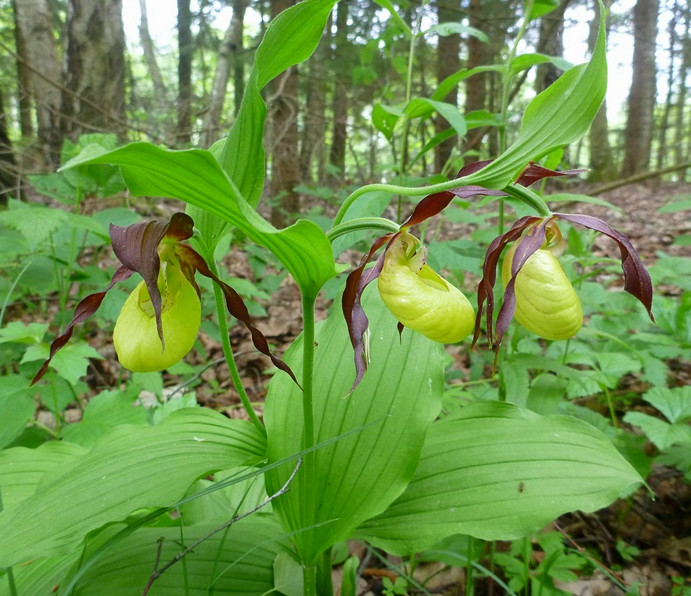 |
Conservation work has been done thanks to our donation in back in 2010. On the sites where intervention for lady's slipper orchids was most urgent, trees and shrubs to be removed were first marked and later removed. Lady's slipper orchids (Artur Wiatr), in May 2016. |
The group in 2011 was one of the first to get the benefit with many in flower. They were in good condition in 2016, too, but only just coming into flower for our group in May 2017 on account of a late spring.
For prices, see Holiday Details at the bottom of the page.
 |
FCO travel advice for Poland here. |
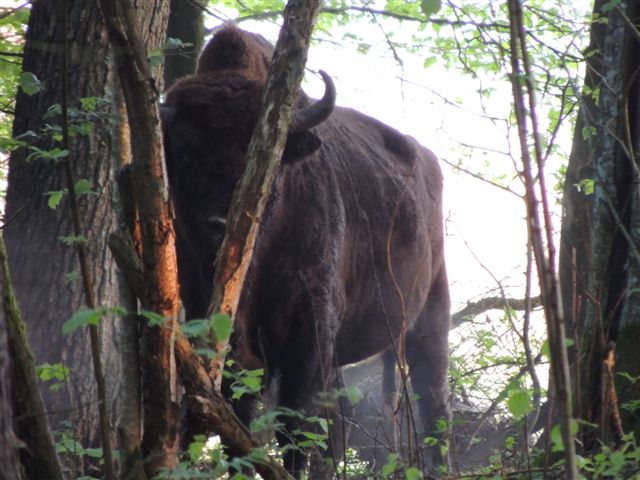
Bison (Sue Rowell), on the holiday in May 2016.
Holiday reports
Report from May 2018 here.
Report from May 2017 here.
Report from May 2016 here.
Report from May 2011 here.
Report from May 2010 here.
Poland recce, autumn 2009 here.
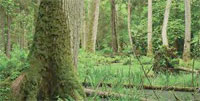
Białowieża forest
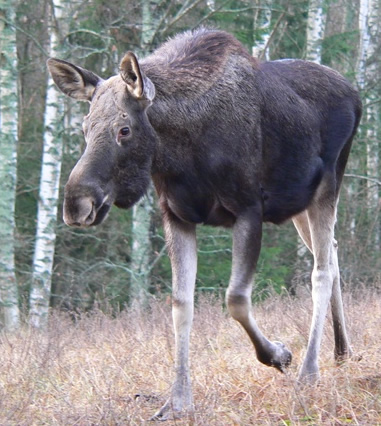
Elk (Artur Wiatr)
Honeyguide web pages about Poland
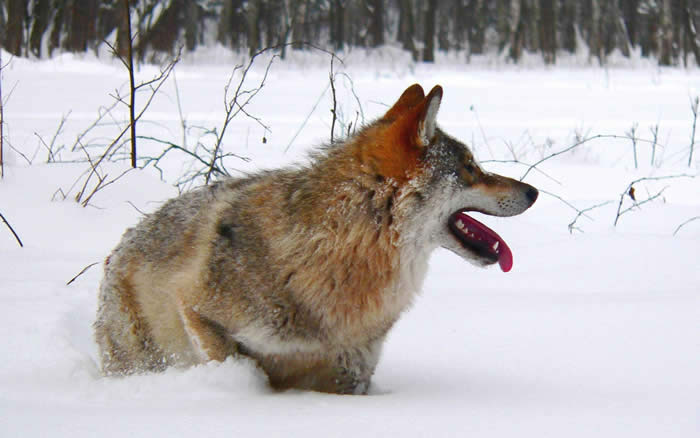
Beavers in Poland.
Pictures of Białowieża forest here.
They are not holiday ideas - at present! - but you might enjoy
Autumn in Poland
Winter nature notes from Poland
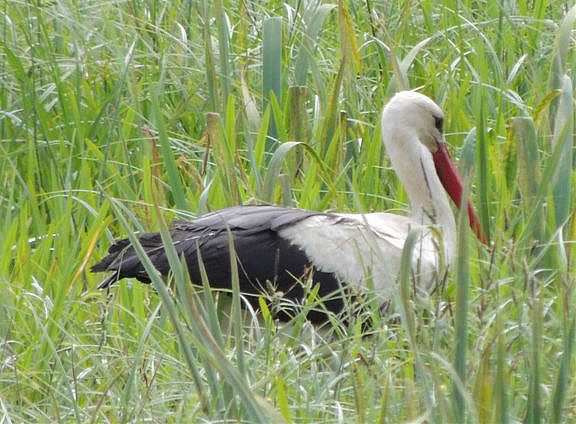
White stork (Sue Rowell)
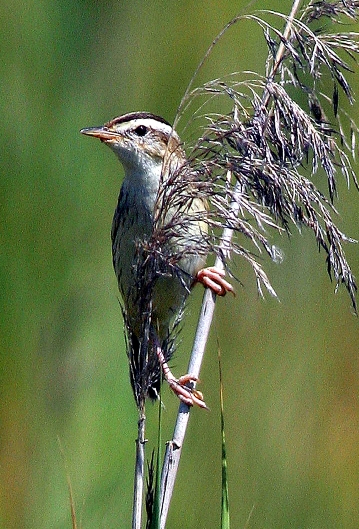
Aquatic warbler (Piotr Talalaj)
Artur Wiatr

Tim Strudwick
SUPPORTING