Archived destinations
UK archive


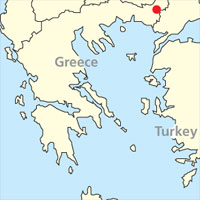
Eastern Greece
Dadia Forest reserve and the Evros Delta
The district of Evros in the north-eastern region of Thrace, overlooking the border with Turkey, is one of the least developed areas of Greece. A mixture of cultures, charming villages, and both farmed and wild landscapes are all set against the nearby expanse of the Evros Delta, one of Europe’s most outstanding wetlands. The area is renowned for its variety of wetland birds and raptors, and regional specialities include pygmy cormorant, Dalmatian pelican, isabelline wheatear and masked shrike
Based outside the village of Dadia, we stay at the ecotourism centre managed by the local community co-operative in collaboration with WWF Greece. Nearby is Dadia Forest Reserve, an Important Bird Area and candidate World Heritage Site. It lies over rugged, limestone hills dominated by pine and oak, with a relatively undisturbed ‘core’ area that still supports wolf and wild boar.
This is one of the best sites in Europe to see raptors and 36 species have been recorded with over 20 species breeding. Dadia holds the last remaining black vulture colony in southeast Europe and both griffon and Egyptian vulture also breed. These can be seen from the comfort of a hide overlooking carcasses left as supplementary food on a feeding station. Short-toed, booted, lesser spotted and imperial eagle can all be seen as well as honey and long-legged buzzard.
Shrikes are a great feature of local farmland with red-backed, lesser grey, woodchat and masked, the last here on the edge of its range. White storks breed in the village squares, the underside of their huge nests busy with breeding Spanish sparrows, and black storks can be seen almost daily in the area.
The Evros Delta is an immense wetland complex, internationally renowned for its wealth of resident and migrant birds. The delta is a mosaic of farmland, freshwater and brackish lagoons, reedy canals and tamarisk scrub. It is one of the few known stopovers of the enigmatic slender-billed curlew, but this is the least likely of all the many migrant waders we may see. Searching out the wettest lagoons there is a chance of seeing pelicans, pygmy cormorant, glossy ibis, herons and egrets, white-winged black and gull-billed terns. Raptors hunt over the delta, including white-tailed eagle, migrant red-footed falcons and an abundance of marsh harriers.
Birds
Other birds to look for include Levant sparrowhawk, goshawk, hobby, scops owl, beeeater, golden oriole, hoopoe, Syrian woodpecker, calandra, short-toed and crested larks, red-rumped swallow, crag martin, blue rock thrush, black-eared wheatear, Bonelli’s, olive-tree, olivaceous, subalpine, Sardinian and great reed warblers, sombre tit, hawfinch, black-headed, cirl, ortolan and rock buntings.
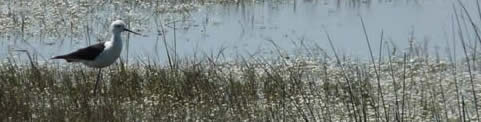
Black-winged stilt (David Bennett)
Reptiles & amphibians
The Evros area supports one of the richest herpetofaunas in Europe and we may see both Hermann’s and spur-thighed tortoises, the striking green toad and several species of lizard. Also locally are the spectacular yellow-bellied toad and European glass lizard, and with luck we might uncover a fire salamander.
Other wildlife
The Dadia Forest area holds a rich assemblage of flowering plants and butterflies. Other invertebrates include dragonflies, praying mantis, crickets and grasshoppers.
Holiday details
At Dadia, two days for relaxing walks on the village outskirts. We will spend two full days in the Evros Delta, including a day in a restricted area. We visit the hills above Loutros, rich Mediterranean scrub with orphean warblers and more open country overlooking the delta. West of Lefkimi, farmland gives way to mixed forest as we climb towards the radio mast on the highest crags and a chance of chukars and eagle owl.
Price: £1,350 per person in twin or double room for nine days (Friday to Saturday).
En suite facilities.
Single room supplement (four only): £140
Flights: Scheduled Olympic Air flights Heathrow–Athens–Alexandroupolis, leaving late evening on 22 April.
Deposit: £200
Maximum number (two leaders): 14
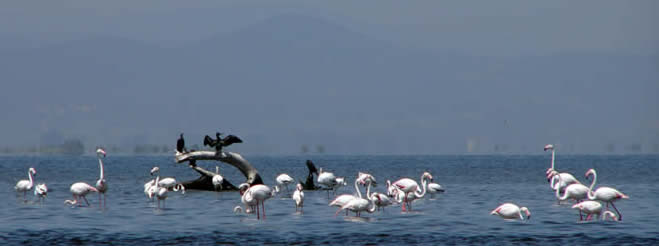
Flamingos on the Evros Delta (Ivan Nethercoat)
Leaders
Robin Hamilton has a wide knowledge of western and central Europe and its wildlife, especially birds. He worked for many years for English Nature.
Rachel Hamilton spent her working life teaching natural history and conservation with the Field Studies Council and at Otley College in Suffolk. She is an enthusiastic all round naturalist, though her first interest is botany. Robin and Rachel, both of whom are experienced wildlife leaders and keen linguists, are regular leaders in Eastern Greece and set up our Cévennes holiday.
Conservation project
WWF Greece runs a project in Dadia Forest reserve in collaboration with the community-based co-operative in Dadia village. Wildlife conservation is achieved by its integration with forestry, farming and ecotourism.
|
There is a network of Important Bird Areas in Greece, details of which are on HOS's website. This link takes you through to the page on East Macedonia and Thrace. Not surprisingly, Dadia-Lefkimi-Soufli forest and the Evros Delta are two key IBAs in this region. |
Holiday report
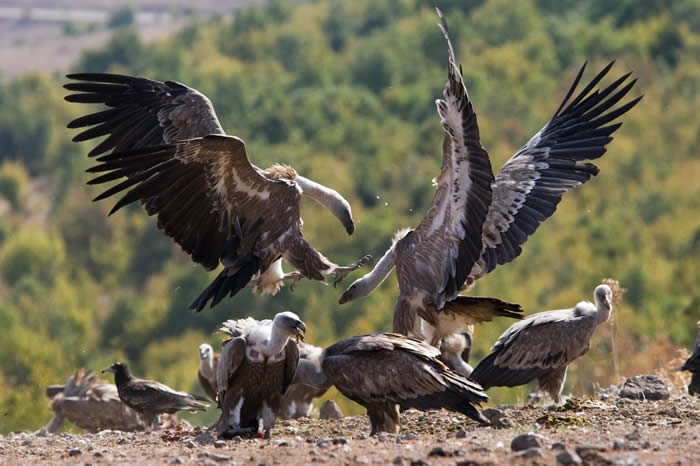
Griffon vultures at feeding station
(Mika Selin www.birdnet.fi)
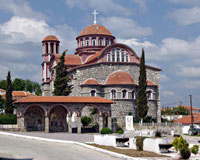
Dadia church (Ivan Nethercoat)
Photos from E Greece
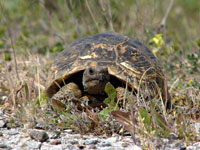
Spur-thighed tortoise (Ivan Nethercoat)
More information
• Birdwatching in Northern Greece (BirdWING)
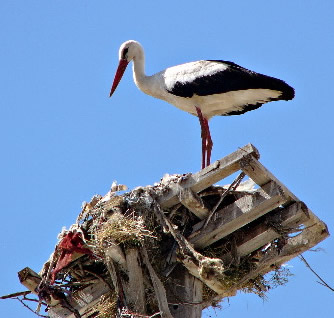
White stork nest in Dadia village (Ivan Nethercoat)
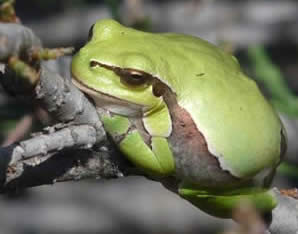
Tree frog (David Bennett)
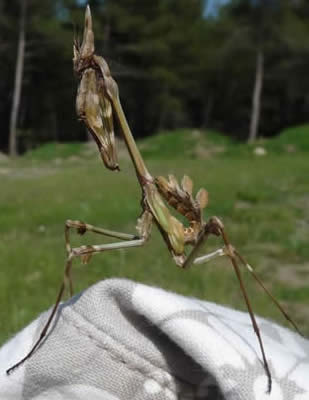
Mantis nymph Empusa pennata (David Bennett)
White stork nest in Dadia village (Ivan Nethercoat)
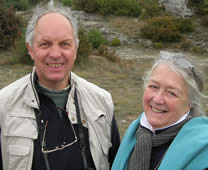
Robin and Rachel Hamilton
 Donation certificate from WWF Greece for our donation of €580 in 2010. See also the thank-you letter from WWF in the 2010 holiday report.
Project to encourage the breeding of Dalmatian pelicans Pelecanus crispus at the Evros Delta: information from Birdwing and the Evros Delta National Park here.

