Destinations
2025
- Morocco
- Extremadura
- Crete
- Menorca (April)
- Lesvos
- Spanish Pyrenees (May)
- South of Salamanca
- Picos de Europa
- Algarve & Alentejo
- The Gambia
2026


News
Picos de Europa, June 2025
"Could write a book" was one comment as we collected holiday highlights. The mix of lovely meadows, abundant butterflies (59 species) and lots of birds, including close to the hotel in Boca de Huérgano, all help to explain why this holiday has run four years in a row. The high alpine experience of Fuente Dé is always enjoyed, and this year all the 'star' birds showed, including rock thrush, alpine accentor and snowfinch. Ibex is a mammal we don't usually see but did find this year; chamois are more reliable. More photos on Facebook. Holiday report here: Picos de Europa 2025.


Trumpet gentians, Duke of Burgundy, Black-veined white moth.

Ibex (Pau Lucio)
South of Salamanca, May 2025
Honeyguide's second South of Salamanca group had weather more akin to an English spring than what you might expect in Spain, yet still found a great deal of the area's wildlife, often around the villages characteristic of the area, including our base at Salvatierra. Birds of prey were especially rich, including Montagu's harrier, black vulture and booted eagle. Other birds included bee-eaters, hoopoes, golden orioles, large numbers of nightingales and more. The 'wonderfully quiet, rich countryside' had a huge range of flowers, including champagne orchids. There was enough sunshine for some 20 butterfly species. Holiday report: South of Salamanca 2025.


Top: male Montagu's harrier; Ornithogallum concinnum. Below: panoptes blue, hoopoe at Salvatierra. Photos by Vega Bermejo.
Spanish Pyrenees, April/May 2025
The group reports "a wonderful and very successful week" with guide and host Peter Rich in the Spanish Pyrenees. Unusually, the holiday started in a new place for Honeyguide, with two nights in Olite, a "very attractive historic town", visiting tablelands/steppe ("amazing landscape" though the special birds were elusive) and the wetland at Laguna de Pitillas where there were red-crested pochards, black-necked grebe, purple heron, black tern, stilts and plenty more, including a booming bittern. The main part of the holiday was based at Casa Sarasa in Berdún, featuring various visits into the lowlands and highlands of the Pyrenees.


Egyptian vultures, black-winged stilt, alpine marmot. Photos and quotes above from Honeyguider Everard Daniel.
Menorca, April 2025
The weather was kind, there was a great variety of flowers, invertebrates, local birds and much more on this lovely island, just a little slow on migrant birds in the western Mediterranean (e.g. compared with Crete). The group met GOB Menorca and the story is told in Honeyguide and GOB Menorca, a blog. Ivan Nethercoat's photos are here on Flickr and there are many more photos on Spring in Menorca 2025: a photoblog, on Chris Gibson Wildlife. Holiday report here: Menorca 2025.

Audouin's gulls (Ivan Nethercoat)
Crete, April 2025
Judging by the fields of wild flowers, Crete had a wet winter, with spreads of colour as well as individual species that impressed. These included 25 species of orchids and perfect timing for tulips on Omalós Plateau and Spili 'Bumps'. Bird migration was steady, including collared flycatcher, bee-eater, golden oriole, turtle dove, marsh sandpiper, a very confiding little stint in Plakias for several days and a big flock of purple herons. Bonelli's eagles showed on five days, and we saw two golden eagles over Omalós. Photos on Facebook.


Cistus creticus, eastern dappled white, bumblebee orchid.
Morocco, March 2025
The winters are dry around Atlas Kasbah, near Agadir, more often than not, though this year's Morocco holiday had a twist: rain arriving in March. Fortunately for the Honeyguide group, when rain fell it was in the evenings and nights. Flowers were affected, though more came out during the week. There were as many birds as ever, not least reliable Moroccan specialities at our base such as bulbuls, house buntings at Moussier's redstart. One of the star birds in this area is also one of the rarest in the Western Palearctic: the northern bald ibis. They are getting easier to see as conservation efforts - supported by Honeyguide - help their numbers increase; 177 pairs in 2023 is a recent count. Other highlights included African green toads, taking advantage of recently flooded areas, the whole Atlas Kasbah experience, including the 'tea ceremony' and Moroccan cookery course, and friendly people everywhere. More photos on Facebook and on Flickr by Mervin Nethercoat. Report here: Morocco 2025.


Cistanche phelypaea; bald ibis and Moussier's redstart (Mervin Nethercoat).

African green toad, with toad spawn.
Extremadura, March 2025
The rain in Spain, like nearby Morocco, was also encountered by our group in Extremadura in March, though only some of the time and there were fine days at the end. It didn't seem to dampen the group's spirits, who were able to enjoy the usual wonderful range of birds with Martin Kelsey as host and guide. Highlights included hundreds of naked man orchids (the weather will have helped the flowers), a confiding woodchat shrike, an aerial dogfight between a black vulture and a Spanish imperial eagle, and the various distinctive landscapes, including dehesa. More photos, by David Bennett, on Flickr; here is the Extremadura 2025 holiday report.


Rock bunting and pink butterfly orchid (Martin Kelsey).

Aerial dogfight between a Spanish imperial eagle (left) and a black vulture (Martin Kelsey).

Bird mural at Saucedilla (Martin Kelsey).
Rhodope lilies thriving: many readers will know that Honeyguide has for many years been funding annual survey & monitoring of the rare Rhodope lily Lilium rhodopaeum at a particular site in Bulgaria's Western Rhodopes (visited by this year's holiday - see 'Bulgaria June-July 2024' below). This is all in the capable hands of local expert and Honeyguide leader Vladimir Trifonov. Vlado's reports for 2023 and 2024 are combined here.
There was a small dip in numbers of lilies in 2023 and an astonishing increase in 2024. The headline news from this year is 691 plants of which 596 were in flower - an increase of 175% from 2023 to 2024.
The report has a table of counts over 17 years from 2008 to 2024. There was an initial decline, and some ups and downs between years, but the main outcome in recent years is hugely encouraging. This is largely a recovery after a period of overgrazing. In coming years this may slow due to undergrazing - just a few deer - though time will tell. Wild boars root in the meadow, and Vlado believes that this is helpful, clearing grass and providing bare areas, probably essential if plants are to grow from seed, though for now vegetative growth seems to be driving the increase.
Honeyguide sent a further £450 to covering monitoring costs for 2023 and 2024. The year by year story of the conservation of Lilium rhodopaeum, since 2012, is here.

Rhodope lily meadow, 22 June 2024 (Vladimir Trifonov).
Honeyguide holidays without flights
Honeyguide wildlife holidays are offered with flights, linking with offering ATOL-protected flight inclusive packages. Holidays without flights for a large group would bring logistical challenges, as well as being outside the ATOL framework. However some Honeyguiders have chosen to join a group without flying, out of preference or for practical reasons. This blog - Honeyguide holidays without flights - pulls together several discussion strands and ideas on this potentially wide-ranging subject.
Kruger NP, October 2024
Five Honeyguiders travelled to Kruger National Park 10-23 October 2024 on a holiday arranged and led by Geoff Crane. Geoff reports that the Kruger was very dry, which meant good conditions for seeing predators: about 40 mammal species included lions, leopards, cheetahs, wild dogs and African wild cat. There were more than 200 bird species and several reptiles. The rains arrived just as the group was leaving. More photos on Facebook and lots more loaded by Geoff onto Googledrive here. Holiday report here: Kruger 2024.


Southern ground hornbill; lion cub (Geoff Crane).
Spanish Pyrenees, October 2024
It was a return to the Spanish Pyrenees and Casa Sarasa at a different season for several in the group, as usually we go in spring, though a first time there for most of the group. It's fair to say that everyone was charmed by host Peter Rich, the town of Berdún and the Pyrenees in general (and several are keen to go again in spring). Three of the days were in the High Pyrenees where patches of autumn-flowering Crocus nudiflorus greatly added to the stunning mountain scenery. There were daily griffons, a bearded vulture put in a timely appeareance at Portalet, two species of chough, and red squirrels appeared a few times. More surprising highlights included male crossbills in the black pine forest at Roncal, the inside story of Loarre Castle, tablecloths with picnics and autumn fungi. Spanish Pyrenees photos on Facebook and Spanish Pyrenees holiday report.
A return to the Painting School, which hosted Honeyguide groups from 1991 to 2006, was a surprise and delight: it is now a museum of musical instruments of local origin, including costumes from where you can see our own Morris dancers' apparel originated, to Spanish bagpipes and a pipe made from a vulture bone. Thanks to the passion of the new owner Angel, it's a splendid new use for a wonderful building to gladden the hearts of those who knew it as a holiday base. Music videos here.


Crocus nudiflorus, male crossbill (Rob Carr).
Falsterbo, September 2024
This year's Falsterbo holiday started with the kind of morning, at Falsterbo's point, where there was so much to see that some were jesting about returning home having seen it all. Birds of prey were especially good, with a constant trickle of sparrowhawks, a mixed group of red & black kites, ospreys and white-tailed eagles, plus a supporting cast of waders, wildfowl, wagtails and migrant tree sparrows. An early departure would have meant missing the afternoon's black woodpecker, which was demolishing a rotten birch trunk, unconcerned about the watching group. The second 'local' day was quieter by comparison. We had two days inland with plenty to see, including Caspian terns, cranes, hobbies aplenty, golden eagle and a nice mix of late flowers, insects and galls. Swedish hospitality and nice food added to the holiday feel. Photos from David Bennett here on Googledrive and on Honeyguide's Facebook. Holiday report here: Falsterbo 2024.


Caspian tern and black woodpecker (Christopher Hall).
New Schengen entry requirements being planned
"The EU plans to introduce the Entry/Exit system (EES). This is a new digital border system that will change requirements for British nationals travelling to the Schengen area. If you are travelling to a country in the Schengen area using a UK passport, you will be required to register your biometric details, such as fingerprints or a photo, when you arrive. EES registration will replace the current system of manually stamping passports when visitors arrive in the EU. "
The initial publicity talked about this coming in during November 2024. The advice now is that the date that EES will be introduced has not been confirmed.
Read more information on the EU Entry/Exit System." More explanation, courtesy of Saga, here.
Bulgaria June-July 2024
It was an overdue return for me to Yagodina (writes Chris), 16 years after my recce visit in 2008. The meadows and roadsides were amazing - like meadows and roadsides should be, full of flowers and abundant insects, butterflies especially, and red-backed shrikes everywhere, including by our base at Hotel Yagodina. Ghost orchid was a superb find, a rare and elusive species: we were helped by being a little later than we usually visit here. It was brilliant to visit the meadow of Rhodope lilies that Honeyguide has been helping to protect and monitor for many years, accompanied by Vlado our local guide and Lilium rhodopaeum expert. Wallcreepers are back in Trigrad Gorge, after a short absence: we saw them well. More photos on Facebook and report here: Bulgaria's Western Rhodopes 2024.


Rhodope lilies: scarce copper on catmint.
Picos de Europa, June 2024
Spring arrived a little later than usual in the Picos de Europa, resulting in nine 'new' butterfly species - namely not on the checklist - including the locally scarce bog fritillary. This year the cable car was working, allowing a visit to the high alpine habitat at Fuente Dé, where we saw wallcreeer, bearded vulture, alpine accentor and snowfinch as well as the reliable alpine choughs. Carpets of wild flowers, the stunning scenery, rock bunting, tree frog and our regular coffee stops were among the highlights.
There is interest among Honeyguiders to run a group here again in June 2025: please get in touch if that could appeal to you, too. Photos on Facebook and report here: Picos de Europa 2024.


Top: marsh fritillary and Iberian tree frog. Bottom: alpine choughs (John Croft) and burnt-tip orchid with a maiden pink tangled in the flower.
Lesvos, April 2024
Honeyguide's first visit to Lesvos for more than a decade (direct scheduled flights, at last, being a crucial factor) was a good reminder of the riches of this Greek island. Highlights included a good range of warblers, golden orioles, shearwaters at sea, Cretzschmar’s bunting and a day with two species of owl (scops and long-eared). Wetlands had flamingos and a very good range of waders. A dry winter and early spring meant fewer orchid species than expected - sadly, the new reality of climate change. Photos on Facebook and holiday report here Lesvos, April 2024.


Greater flamingos, Cretzschmar’s bunting (Steve Cale).
Crete, April 2024
Crete more than lived up to its windy reputation this year. Several days of warm northerlies had the bonus of bringing the best year ever for birds in our base at Plakias, with daily wood & common sandpipers and little ringed plovers in the river, plus Temminck's stint, night heron and black-headed yellow wagtails. Other highlights included ortolan bunting, marsh sandpipers, migrating herons (several species) and bee-eaters. It was drier than usual albeit less dry than Valencia, though there were still lots of flowers: 20 orchid species, tulips and various endemics. Invertebrates added interest, with nosey grasshopper and rhinocerous beetle especially popular. Hospitality and taverna food all added to the holiday experience. Dates for 2025 are 8-16 April and it's never too early to put your name down. Photos on Facebook and report here: Crete, April 2024.
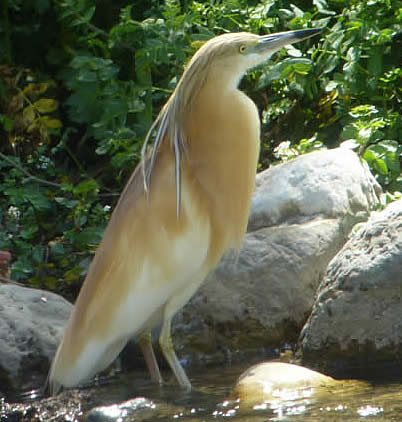
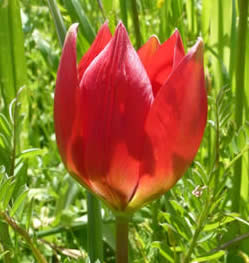
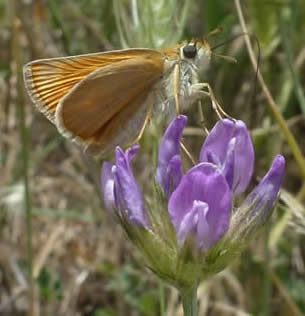
Squacco heron at Moní Préveli; Tulipa doerfleri, Spili; Lulworth skipper.
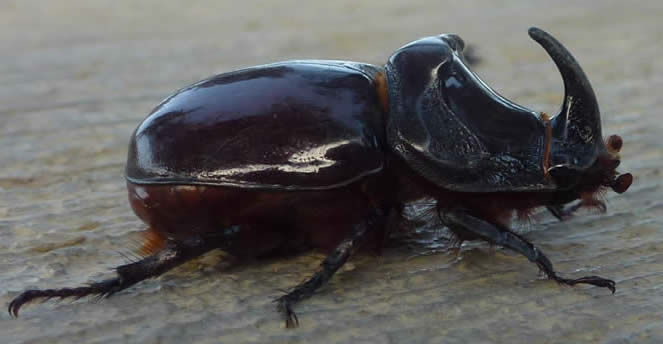
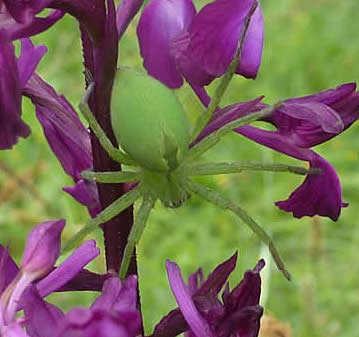
Rhinoceros beetle, Plakias sea front; green huntsman spider (on a loose-flowered orchid).
Valencia, March 2024
Valencia region had almost no rain in autumn and winter, which had quite an impact on the number of flowers on show - just two orchid species, for example. Birds on wetlands were plentiful, including huge flocks of glossy ibises, four species of Mediterranean ducks (white-billed, ferruginous and marbled ducks and red-crested pochard) and hundreds of Audouin's gulls. We found trumpeter finch, black wheatear and displaying Bonelli's eagles in a semi-desert area. Another wetland had purple swamp-hens and red-knobbed coots. We met local guide Pau Lucio's ringing group, who had bluethroat, moustached warbler and little bittern to ring and release. Sunshine brought out butterflies, including mallow skipper, green hairstreak and Provence orange-tip. Photos on Honeyguide's Facebook and more photo on Pau's Facebook. Report: Valencia March 2024
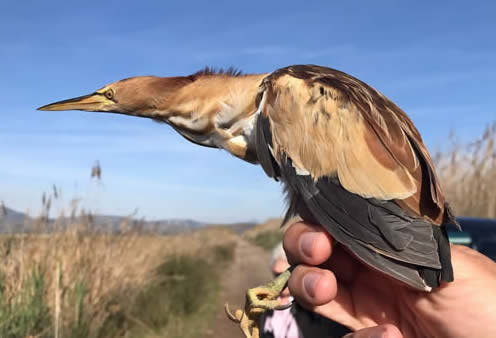
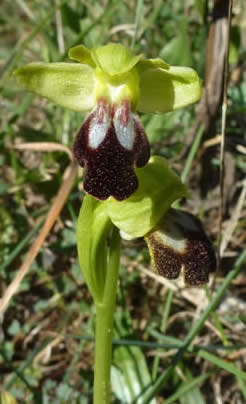
Little bittern about to be released by ringing group Pit-roig (Julie Durdin); sombre bee orchid Ophrys fusca.
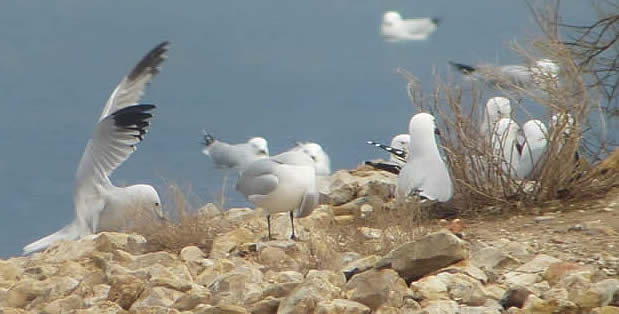
Audouin's gulls, Valencia region.
Extremadura, February 2024
Feedback from February's group in Extremadura was very positive, despite wintry weather, and the fact that four have booked to return to Extremadura in March 2025 speaks volumes — this holiday is already fully booked. Birds featured in the group's holiday highlights, inevitably, including lots of cranes, the raptors especially Bonelli's eagle and the large numbers of vultures, great bustard, hawfinch and great spotted cuckoo. Flowers included brown bells (Dipcadi) and two narcissus species, though it was least adder’s tongue fern that excited the group the most. Martin and Claudia Kelsey's hospitality and food was greatly praised. Report: Extremadura February 2024.
The conservation donation to SEO (BirdLife Spain) from this holiday was £330, which takes our running total of donations above £150,000, to £150,127.
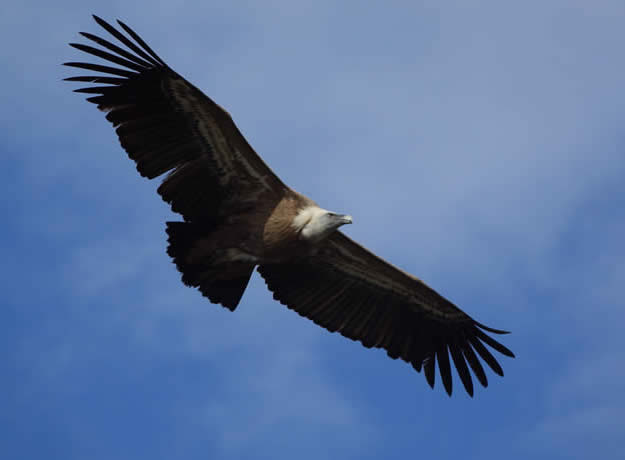
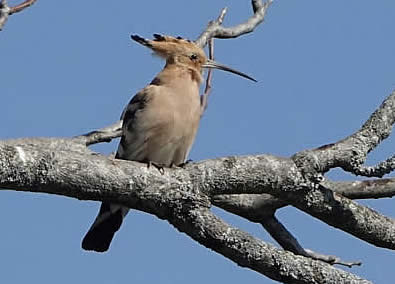
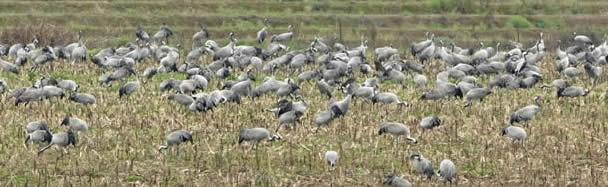
Top: griffon vulture and hoopoe. Bottom: massed cranes. All in Extremadura and by Tim Wright. More photos on Honeyguide's Facebook.
Kruger National Park, October 2024
Two Honeyguiders are visiting Kruger National Park 10-23 October 2024 on a holiday arranged and led by Geoff Crane, who guides all of Honeyguide's holidays in southern Africa. They would be very happy to have up to three additional Honeyguiders with them (a practical number in one vehicle) - all places now taken. This is a holiday that is already guaranteed to run. The cost within South Africa will be R105,000 (ZAR, rands) per person sharing (at today’s rate of exchange that is about £4,300). The idea is that you book directly with Geoff Crane - we'll put you in touch - though we can arrange a flight-inclusive package if you wish.
The itinerary - here - uses three bases within Kruger National Park for 13 nights. There is lots of information about Kruger National Park on our Kruger web page, including previous holiday reports. Photos of wildlife in Kruger NP, by Geoff Crane, on Facebook.
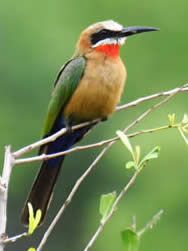
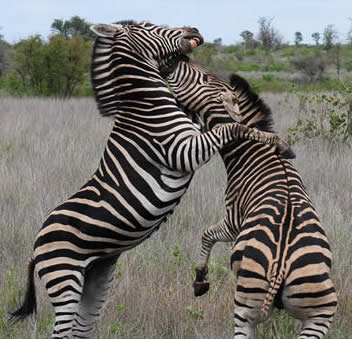
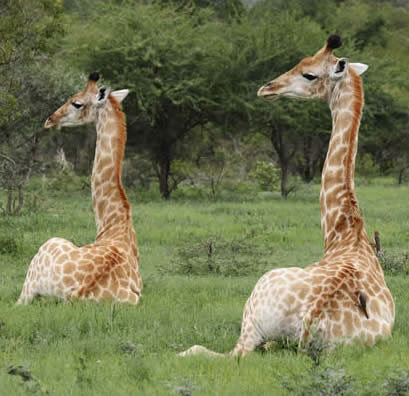
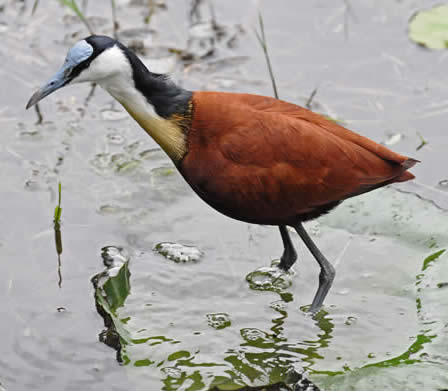
Some highlights from Kruger NP, October 2012: white-fronted bee-eater; zebras; giraffes with oxpeckers, African jacana (photos by Rob May). Click on the pictures to see full-size images.

Have I got old news for you? . . . News 2023 . . . News 2022 . . . News 2020-21 . . . News 2019. . . News 2018 . . . News 2017 . . . News 2016 . . . News 2015 . . . News 2014 . . . News 2013 . . . News 2012 . . . News 2011 . . . News 2010 . . . News 2009 . . . News 2008 . . . Back to top of this main news page
Honeyguide's Air Travel Organiser's Licence 2025-26 here (Honeyguide's 32nd renewal).
Electronic Travel Authorisation (ETA): the UK government is introducing an Electronic Travel Authorisation (ETA) scheme for all visitors to the UK. An ETA is a digital permission to travel and if you’re not a UK or Irish national, you may need one to enter the UK. What you need to know: From 2nd April 2025, all visitors who are not UK or Irish nationals will be required to purchase an ETA before they travel to the UK. More information on gov.uk
This is the current advice (March 2025) on the foreign travel advice pages of gov.uk: "New Schengen entry requirements The EU’s Entry/Exit System (EES) is expected to start in October 2025. It is not currently in operation. The European Union will inform about the specific start date of the EES before its launch. Read more information on the EU Entry/Exit System".
Bermuda buttercups
Blog by GOB Menorca and photos via Honeyguide's Facebook.
Blogs 2025
On the Honeyguide blogspot.
Poker Wood, Honeyguide social July 2025
Thorpe Marshes at its colourful best July 2025
Hickling, Honeyguide social July 2025
No show for ‘Big Yellow’ bee orchids in drought year June 2025
Honeyguide and GOB Menorca April 2025
Signs of Spring April 2025
Cruise to N Africa and Iberia, February 2025
Red-necked grebe at Thorpe and Whitlingham
Conservation donations from Honeyguide in 2024
Blogs 2024
Barbershop singing: December 2024 (Oh What a Month!)
Honeyguide holidays without flights November 2024
South of Salamanca November 2024
From Down Under to East Anglia: Broads & Suffolk coast 13-16 October
Plumstead and Holt Country Park, 8 August
'Big Yellow' bee orchids 6 June 2024
Eaton Park, Norwich, 2 May 2024 (guest blog)
Floods in Valencia
I expect we’ve all seen the shocking pictures of floods in Valencia region, Spain (November 2024). Several Honeyguiders asked after Pau Lucio and his family, and they are fine. They live near the coast and the bulk of the rain fell inland.
Villalonga is also OK, the base for Honeyguide’s Valencia holiday that ran in March this year. That was after a long drought in eastern Spain, an autumn and winter with almost no rain: both sides of climate change in a short space of time.
Carbon offsets
September 2024: for a seventh time, we have bought carbon credits that protect tropical forest in Gola Rainforest National Park in Sierra Leone.
The September 2024 purchase was for 52 tonnes of carbon credits through Stand for Trees (certificate here). The cost was £19/tonne x 57.5 tonnes = £1092.50.
Read more about this on our Carbon offsets web page.
ATOL certificate
Honeyguide's Air Travel Organiser's Licence 2024-25 here (Honeyguide's 31st renewal).
France photos, May 2024
GHIC/EHIC
Following on from the passport notes below, a reminder that any EHIC/GHIC has an expiry date. Cards can be renewed free of charge online via the NHS website.
Less widely known is that you can get temporary cover for emergency treatment abroad with a Provisional Replacement Certificate. In this way, if you do not have a UK Global Health Insurance Card (GHIC) or UK European Health Insurance Card (EHIC) and need emergency treatment abroad, you can still get help with paying for your treatment.

GHIC
Passports
You may have seen a recent news story about travellers finding that their passport was not still in date when they thought it had some months to run e.g. here on the BBC’s website. This is due to the passport’s ten year life span being counted from the issue date.
Under the "10-year rule", for the EU your UK passport must have been issued less than 10 years before the date you enter the EU country (ie the "date of issue"), and be valid for at least three months after the day you plan to leave (ie the "date of expiry").
Honeyguide booking forms request that you note passport issue and expiry dates, so we may spot when there is a problem – this happened earlier this year. In the end, it’s up to any traveller to be sure that their passport is valid.

Spain, Greece and face masks
Spain has introduced the mandatory use of face masks in healthcare settings such as doctors' surgeries, hospitals or pharmacies, "Due to an increase in respiratory infections such as flu and COVID-19" (January 2024). No end-time for this is set.
The same applies to Greece. Our holiday pages have links to FCO travel advice, which explains this and more.
Conservation donations 2023
Three recent donations from Honeyguide - linked to Menorca, north Norfolk and Algarve & Alentejo - are described in this blog: Conservation donations from Honeyguide in 2023
The blog gives details of all that we have done to support conservation projects in 2023, and gives our running total of £149,797 donated to nature conservation since Honeyguide started in 1991.
Blogs list continues on News 2023, News 2022 and News 2020-21

