Destinations
2026
- South Africa: Cape & the Garden Route
- Extremadura
- Crete
- South of Salamanca
- Picos de Europa
- French Pyrenees (June)
- Bulgaria's Western Rhodopes
- Falsterbo
- Danube Delta
- Madeira
2027


Crete 8 - 16 April 2026
Island birds and flowers in the cradle of civilisation.
A week plus a day on Crete (as in 2023, 2024 and 2025)
No single supplement on this holiday.
Dates above are one day later than originally planned.
Crete – a favourite destination Blog, December 2025.
Crete is a magical and mysterious island. Home of Europe's earliest civilisation, influenced by many nations, yet it retains its own identity and culture of which its people are justifiably proud.
The island's position in the Mediterranean has not only played a crucial role in its history but is an important migration route for birds on their way north in spring. Crete in April is free of crowds, the days can be warm and the hillsides are full of flowers.
This, the largest and most southerly of all the Greek islands, is dominated by a backbone of mountains through which cut many deep gorges. These are as spectacular as they are rich in wildlife, be it migrant birds, nesting vultures or endemic wild flowers.
Nature and history are difficult to separate on Crete, with wildlife close to important archeological sites. We shall sample Minoan ruins at Phaestos.
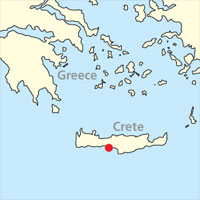
We are based at the small and friendly Hotel Sofia in Plakias on Crete's south coast, once a fishing village, now a small town. It is ideally placed for local walks and excursions and has an impressive backdrop of gorges and mountains.
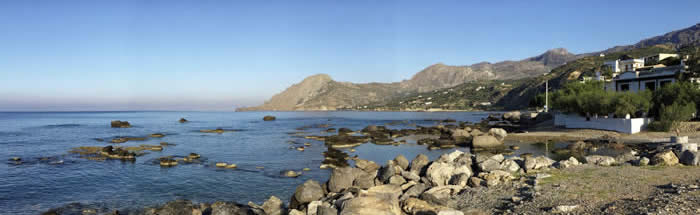
Plakias Bay (Ivan Nethercoat).
Flowers
Crete's rich flora of 1600 native species includes 140 endemic to the island, such as Cretan cyclamen and Cretan ebony. In April many orchids are at their peak with Cretan bee, naked man, few-flowered, rainbow, four-spotted and bumblebee orchids among 20 or more species. Shrubs like Jerusalem sage and cistus contribute to colourful and aromatic hillsides.
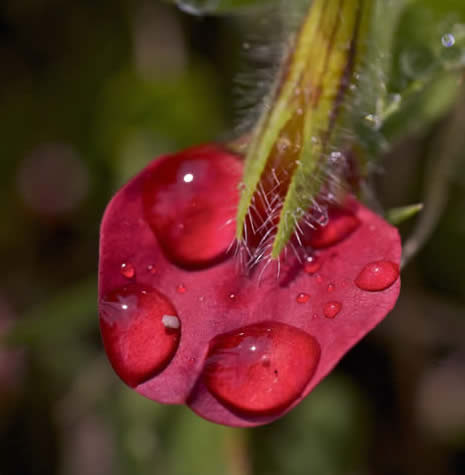
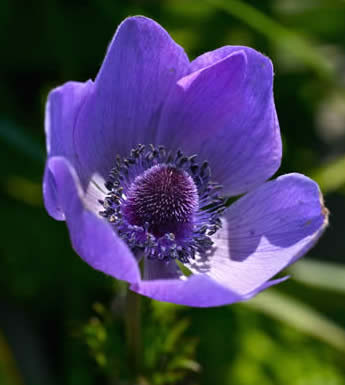
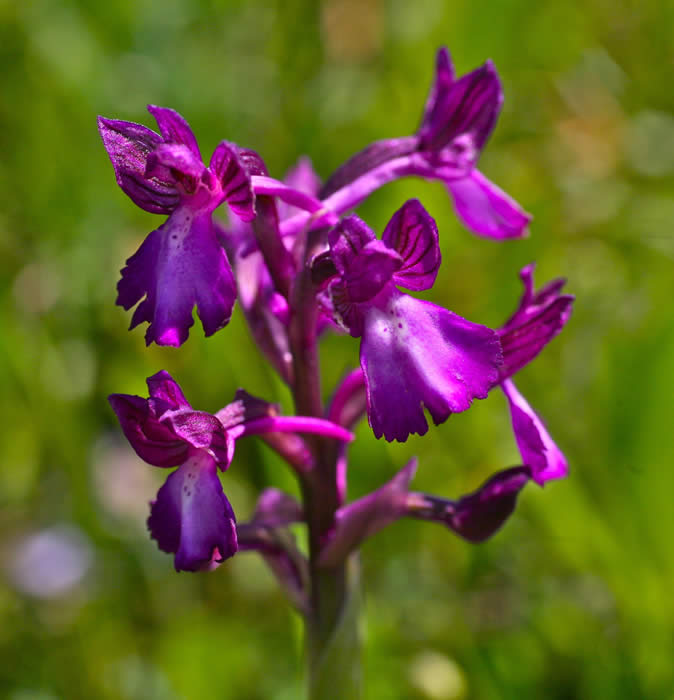
Left to right: asparagus pea, crown anemone, Orchis boryi (all by Phil Brew).
From Cretan flora through a macro lens. See also our Crete orchids page.


Orchids from 2026: Cretan bee orchid (Ophrys cretica); Monkey orchid; Bishop's ophrys (Ophrys episcopalis); milky orchid (Orchis lactea), a species that has often finished flowering for our visits.
Birds
The mountains and gorges of Crete are a stronghold for birds of prey, with the largest population of griffon vultures in Greece. Lammergeier, Bonelli's and golden eagles and buzzard all breed, as do crag martin, blue rock thrush, chough and raven. The hillsides and scrub support both Sardinian and the much rarer Rüppell's warbler. Many birds pass through on migration, pausing especially at wetlands, however small. These might include red-footed falcon, alpine swift, bee-eater, squacco heron, little bittern and various waders and warblers.
Other wildlife
At this time of the year there are butterflies such as swallowtail, scarce swallowtail, Cleopatra and the endemic Cretan festoon. We often see freshwater crabs; reptiles can include Balkan (stripe-necked) terrapin and Balkan green lizard.
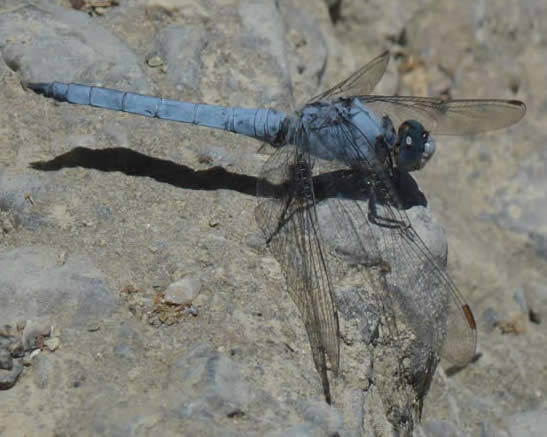
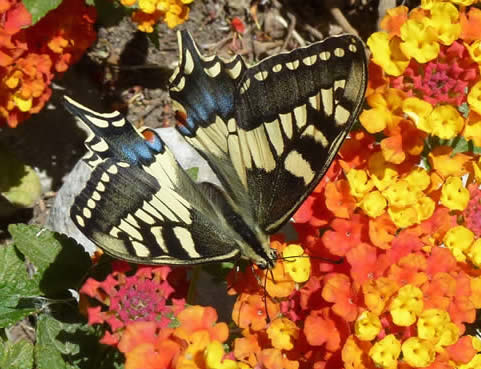
Southern skimmer Orthetrum brunneum and swallowtail on lantana, both near Moni Préveli, spring 2016.
Holiday details
As well as local walks, our minibus trips this week include trips to Moní Préveli, Kourtaliótiko and Kotsiphou Gorges, Frangokastello, Spili, Ayia reservoir and, possibly, the mountain plateau at Omalós.
Price: £1,900 per person in single or twin room, for a week plus a day (eight nights, Wednesday to Thursday). There is no single supplement on this holiday. This price includes our taverna evening meals, plus picnics or an occasional taverna lunch.
En suite facilities
Flights: scheduled easyJet flights, Gatwick (North Terminal) to Chania
08 Apl: EZY8223 depart London Gatwick 08:00 arrive Chania 14:00.
16 Apl: EZY8226 depart Chania 16:05 arrive Gatwick 18:15.
Two in the group are flying Manchester-Chania (Ryanair) and returning on easyJet from Heraklion to Liverpool, which might suit anyone else living in or near north-west England.
Deposit: £400
Maximum number: 14, with two leaders.
Conservation project
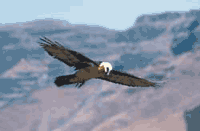
The bearded vulture (lammergeier) conservation project is run by the Hellenic Ornithological Society, BirdLife Greece.
Crete has the only breeding population in south-east Europe (6-7 pairs in 2013, with four nests); the species is practically extinct in mainland Greece and elsewhere in the Balkans. Bearded vulture (Roger Tidman) |
 |
Alongside survey, monitoring and raising public awareness, the long-term survival of Europe's rarest vulture is being tackled by site protection, food provision and the encouragement of traditional grazing systems. More on lammergeiers and other conservation matters on Crete here.
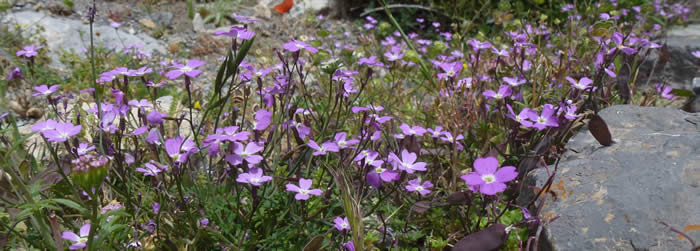
Ricotia cretica in Kourtoliótiko Gorge.
Leaders
Chris Durdin is the driving force behind Honeyguide, running holidays since 1991. For many years he combined this with his work for the RSPB in Eastern England, often the Society’s spokesman, but has been concentrating on Honeyguide full-time since 2009. Chris is the co-author of a book about Norfolk’s cranes and leads regular walks on his local wildlife trust nature reserve, Norfolk Wildlife Trust's Thorpe Marshes. He’s also a barbershop singer. As a naturalist, Chris is an all rounder. Chris has regularly co-led Honeyguide's Crete holiday for many years.
|
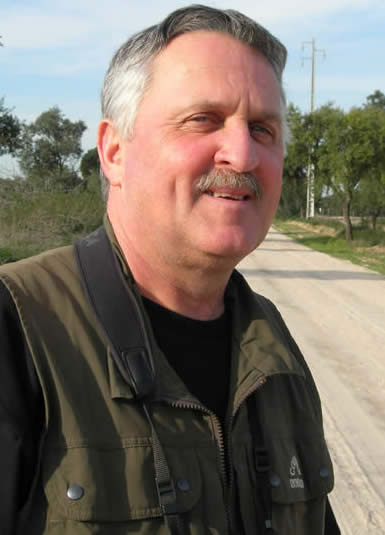
Rob Macklin was previously the RSPB’s area manager on the Suffolk coast, covering Minsmere and North Warren among several nature reserves. He now lives in Devon and uses his years of experience in nature conservation as an environmental consultant. He has co-led our Crete holiday in several occasions.
Rob Macklin, photographed in Portugal. |
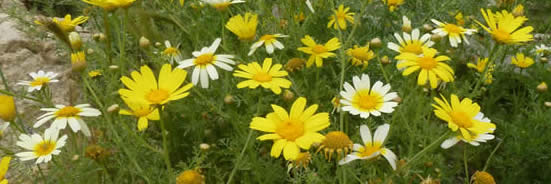
Crown daisies, both colour forms, Crete, April 2018.
For prices, see Holiday Details at the bottom of the page.
 |
FCO travel advice for Greece here. |
Covid
There are no entry rules relating to Covid. You may need to wear a mask in healthcare and social care facilities (e.g. hospitals, clinics, health centres and care homes).
Blogs
Banded argiope spider Argiope trifasciata on Crete May 2026
Crete – a favourite destination December 2025
Holiday reports
Holiday report 10-17 April 2018
Holiday report 17-24 April 2018
Many more Crete holiday reports from three decades of Honeyguide holidays here.
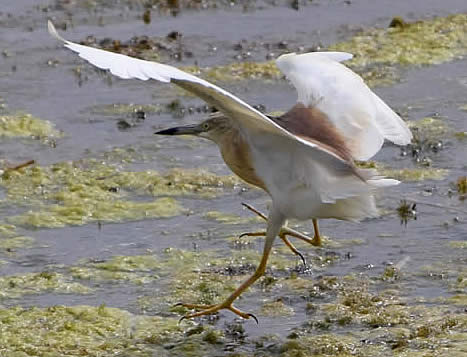
A squacco heron lands at Ayia Reservoir (Dawn Stevens).
Crete photos
Photos from April 2026 on Facebook and more photos by David Bennett.
Photos from April 2025 on Facebook.
Photos from April 2024 on Facebook.
Photos from April 2023: by Chris Durdin on Facebook; Mervin Nethercoat on Flickr.
Photos from April 2022: Orchid photos on Facebook and more Facebook photos
Photos from April 2018: Ivan Nethercoat's photos on Flickr, by Chris Durdin on Facebook.
Photos from April 2017 on Facebook here.
Crete gallery, photos by Ivan Nethercoat.
Photos from April 2012: by Honeyguide leader Tim Strudwick and Honeyguider Steve Kourik.
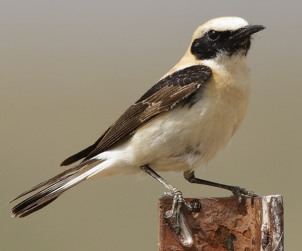
Black-eared wheatear (Steve Fletcher)
Honeyguide web pages about Crete
Crete Bird Reports. Collated by Stephanie Coghlan, made available on the internet through Honeyguide.
Cretan Bluet (damselfly).
Cretan flora through a macro lens
Our Crete orchids page and orchids gallery.
More on bearded vultures and other conservation matters on Crete here.
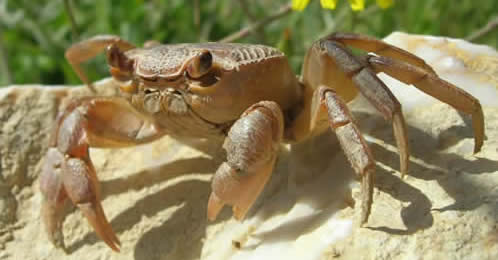
Freshwater – or land – crab.
Crete information and useful links
There are pictures of the Hotel Sophia - or Sofia - on its website
. |
 |
Our transport on Crete is arranged by Ariadne of the locally-based holiday and travel service company www.authentic-crete.gr
www.cretewww.com is a website "dedicated to help record, conserve and promote the wildlife of Crete."
Cretan flora: an ID web guide
Crete pages on Fatbirder.com.
Useful link for Crete information, including weather: www.greekisland.co.uk
Unforgettable things ...
to do before you die: discovering wild flowers on Crete. Of course we think that, but it’s not only us. One of 40 things in Unforgettable things to do before you die by Steve Watkins and Clare Jones (BBC Books, 2005) is a spring visit to see Crete’s wild flowers.

Crete also features in Wildflower Wonders of the World by the late Bob Gibbons (left), including photos from the Kedros Foothills and Omalós Plateau.
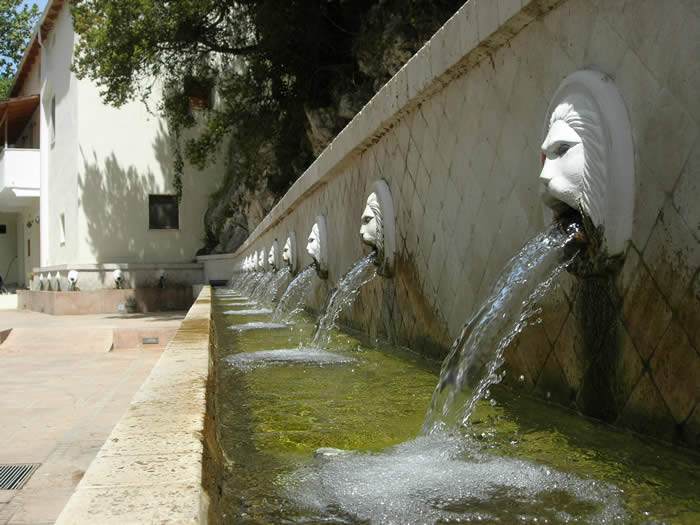
Fountains in the square at Spili
 |
More information about the work to protect bearded vultures - as they prefer to call them in Greece - on the website of the Hellenic Ornithological Society and the Natural History Museum of Crete. |

Chris Durdin

