Destinations
2026
- South Africa: Cape & the Garden Route
- Extremadura
- Crete
- South of Salamanca
- Picos de Europa
- French Pyrenees (June)
- Bulgaria's Western Rhodopes
- Falsterbo
- Danube Delta
- Madeira
2027

... where there are many holiday photos to enjoy.

The air holidays shown are ATOL Protected by the Civil Aviation Authority. Our ATOL number is ATOL 3253. ATOL Protection extends primarily to customers who book and pay in the United Kingdom. Click on the ATOL logo if you want to know more.
Crossbill Guides
Nature guides to some of our favourite places
Crossbill Guides are now available through NHBS, with purchases earning a small contribution to the Honeyguide Wildlife Charitable Trust. Alternatively, they can be ordered directly through the webshop on www.crossbillguides.org.
To order, click on the NHBS logo (right) or, for the Extremadura or Spanish Pyrenees guides, on the product link in the right hand column. |
 |
The guides below relate to Honeyguide wildlife holidays, as do the second edition of the Extremadura Crossbill Guide (top right) and Andalusian Sierras. Take a sneak preview of Extremadura sample pages here. Also see right hand column for other guides in the series. Prices quoted were right when the web page was prepared, but may change.
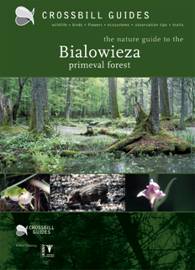
The nature guide to the Bialowieza primeval forest and
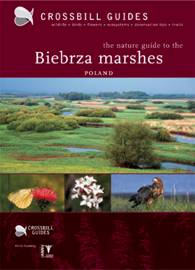
The nature guide to the Biebrza marshes. Honeyguide holiday: Poland
"On the border of Poland and Belarus lies the famous Bialowieza forest, a last remnant of the primeval vegetation that once covered the larger part of central Europe. From the outside it looks like a dense and forbidding wall of trees, but once inside the forest manifests itself as a spacious cathedral. "Packs of wolves and herds of bison roam the forest. Cranes, pygmy owls, black storks and nearly all European woodpeckers are just some of the birds that first come to mind. " More information (pdf) here |
"In the far north-eastern corner of Poland lies an unexpected natural gem: the Biebrza river valley. The river flows like a shiny ribbon through dense flood forests, mysterious alder woods, flowery river dunes and open sedge marshes. It is the most intact floodplain left in central Europe. "Here, in what seems like an anachronism compared with the rest of the central European plain, you can still encounter elk, several eagles, cranes and black storks. "
More information (pdf) here |
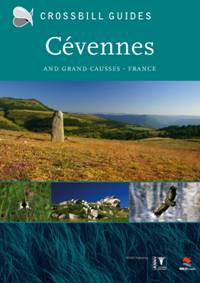
Cévennes and Grand Causses. Honeyguide holiday: The Cévennes
"Just north of the French Mediterranean lowland lies a rugged mountain landscape of unprecedented beauty. Here, in the southernmost part of the Massif Central, the rocky heights are covered in purple heathlands and strong-scented broom brush. |
"The slopes are covered in extensive chestnut forests, while in the deep crevices countless rivers and brooks search their way to the plains. "This region is also famed for its many spectacular gorges of several hundred metres deep, where vultures circle against a background of massive stone pillars. Small, medieval villages cling to narrow ledges halfway up the steep slopes, while, higher up, vast open limestone plateaux are deserted except for the occasional sheep herd and an excessive amount of wildflowers. "This is the romantic landscape of the Cévennes and Grands Causses, one of France’s most authentic regions." More information (pdf) here |
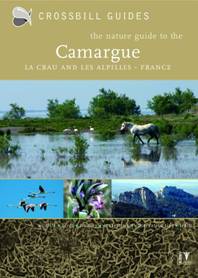
The nature guide to the Camargue. Honeyguide holiday: the Camargue.
|
"This guidebook describes the nature life of three totally different areas that are each others direct neighbours: Camargue, La Crau and Les Alpilles. "The Camargue is a huge complex of meadows, reedbeds, dunes and salt marshes that filled with birds. Visitors are treated to grand views over large lagoons with flamingos and waterfowl. The shimmering steppes of La Crau are inhabited by a Sahara-like birdlife. "Les Alpilles have yet another appeal. The forested hills and white limestone cliffs are dotted with orchids and inhabited by beautiful butterflies. Combine the three areas and you have a region of an incredible diversity." More information (pdf) here |

Spanish Pyrenees and the Steppes of Huesca. Honeyguide holiday: the Spanish Pyrenees.
Extremadura, Spain. This second edition came out in March 2011.
Honeyguide holiday: Extremadura
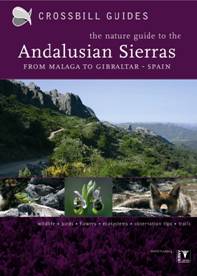
Andalusian Sierras, Spain
Honeyguide holiday: Tarifa and Gibraltar
More information (pdf) here
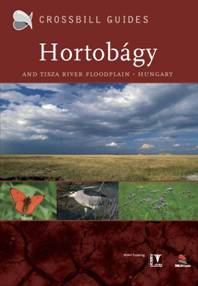
Hortobágy and Tisza River Floodplain, Hungary
More information (pdf) here
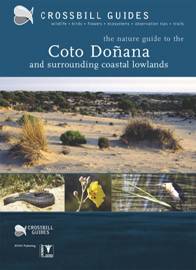
Coto Doñana & surrounding coastal lowlands, Spain
More information (pdf) here
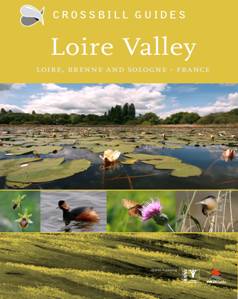
Loire Valley – Loire, Brenne and Sologne, France
More information (pdf) here
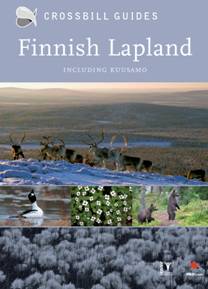
Finnish Lapland
More information (pdf) here

