Destinations
2024
- Extremadura
- Valencia
- Crete
- Lesvos
- South of Salamanca, Spain's Wild West
- Danube Delta
- Picos de Europa
- Bulgaria's Western Rhodopes
- Falsterbo
- Spanish Pyrenees, autumn
- The Gambia
2025

... where there are many holiday photos to enjoy.

The air holidays shown are ATOL Protected by the Civil Aviation Authority. Our ATOL number is ATOL 3253. ATOL Protection extends primarily to customers who book and pay in the United Kingdom. Click on the ATOL logo if you want to know more.
Mystery wildlife
This web page is about natural history puzzles: trying to identify species that Honeyguiders – leaders or participants – find a mystery.
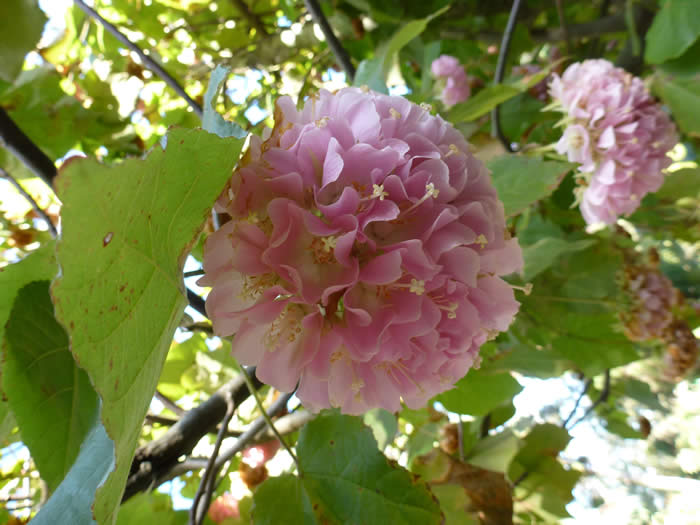
This exotic tree grows at Huerta Grande, our base for our Tarifa holiday. It's taken a while to name it, but we can now: Tropical hydrangea Dombeya × cayeuxii. Its Wikipedia page also gives the common names pinkball or pink ball tree. It's the cross Dombeya × cayeuxii as Dombeya wallichii has a 5-pointed leaf.
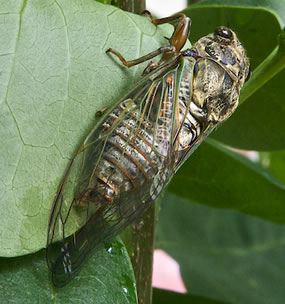
This larval case, below, was emailed to me from France. Very puzzling until the case's incumbent came to light - a cicada, right.
Photos by Roger Newman in Charente, France, June 2010. His red and black fire bugs photo is here |
 |

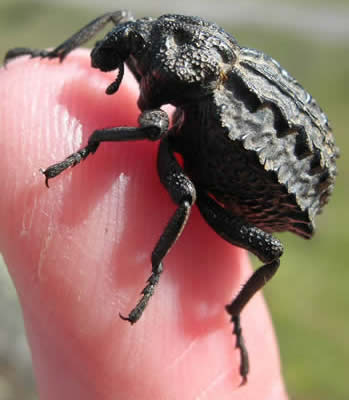
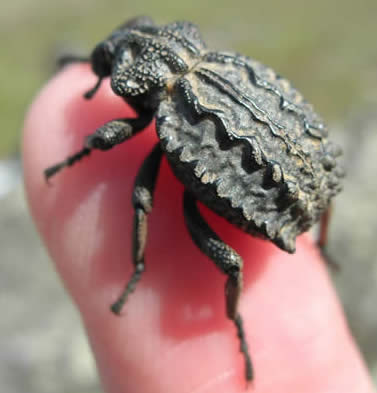
Here's one of our first mysteries: a strange beetle in Extremadura in March 2010. It joined us at a picnic on the Belén Plain, just north of Trujillo.
This armoured beetle or weevil reminded me of another we found in Algarve in April 2009, though less elongated - pictured top right (also in the holiday report here page 13). That armoured beetle was eventually identified as Sepidium elongatum.
Mystery weevil, Extremadura, |
Neither the Algarve beast, nor this one in Extremadura, were in a book on Iberian invertebrates owned by Extremadura leader Martin Kelsey. Internet searches are another way of trying to get an ID, though that's hit and miss. Via Honeyguide's e-newsletter, this puzzle has reached two of the UK's top entomologists. They advise that it is a weevil of the genus Brachycerus. More information remains welcome! |
Still unsolved is a flower from Greece photographed by Honeyguider Sue Davy. Sue is now our host/local organiser in the Peloponnese in mainland Greece.
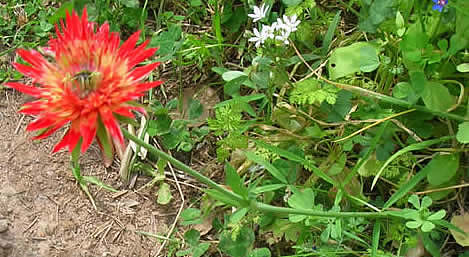 |
The flower is plainly a composite – daisy family – but isn't in Blamey's Mediterranean wild flowers. It was photographed on 10 April at 200-250 metres. |
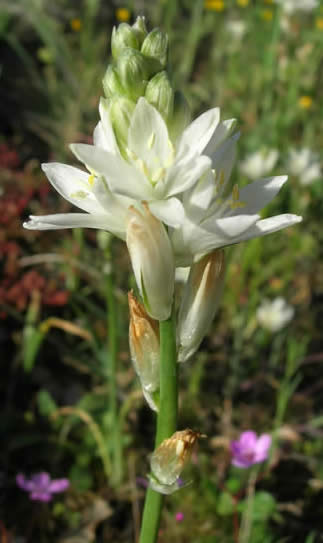
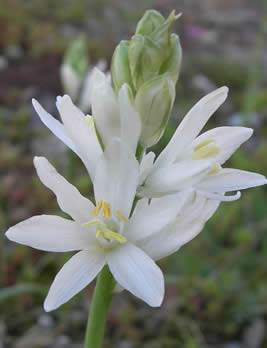
This flower is also from Extremadura in March 2010 - a mystery solved thanks to John Muddeman, from Madrid, who was our Extremadura holiday leader for several years and also in the Picos de Europa.
Mystery lily, 22 March 2010 The leaves had a subtle onion smell and I thought it wasn't a star-of-Bethlehem (Ornithogalum) as it has all white petals, rather than tepals with a green stripe on the back. Not so, John advises: it is Ornithogalum concinnum, and looking more carefully there is a green stripe on the bud, but lost in the full flower. |
This white flower was growing in small patches on small granite platforms by roadside near Trujillo. It's not a plant I recall seeing before, suggesting it's early to flower but more evident this year in a late spring. It's not in Blamey/Grey-Wilson's Mediterranean flower book, but there is, it turns out, a black-and-white line drawing in Polunin's Iberian book that doesn't do it justice.
|
Chris Durdin, April 2010, last updated February 2016
We're pleased to help with wildlife mysteries. Another option is www.ispot.org.uk where you can post photos of puzzling wildlife.
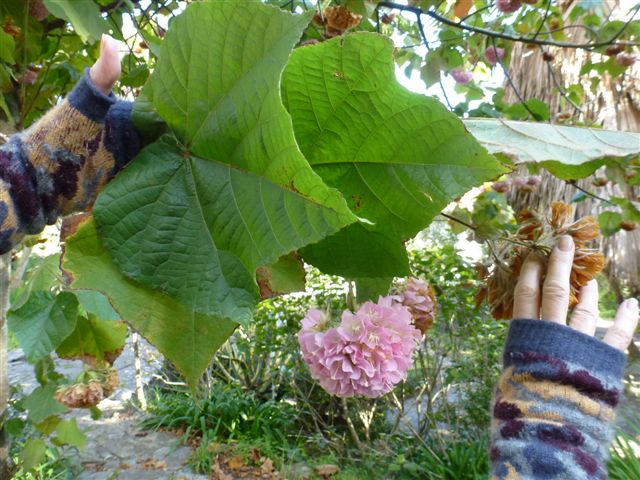
Internet references show this leaf shape is right for Dombeya × cayeuxii.
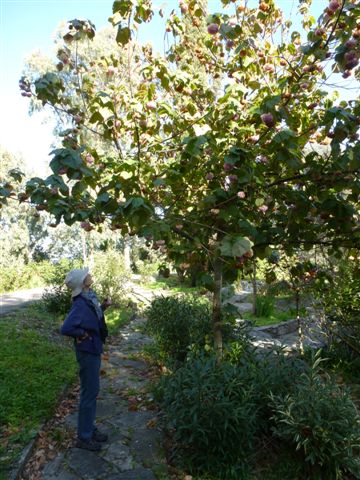
Here's the tree at Huerta Grande.
Now, what on earth is this?

Bob Harris suggests Gallus gallus stiltica, otherwise known as Pseudophoenicopterus ersatzae.
I fear it's a Hoodwinkus fotoshopii, possibly subsp aprilfoolsii
Other suggestions?
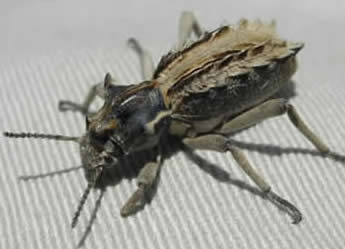
An armoured beetle Sepidium elongatum - a mystery from Algarve 2009 that was later solved.
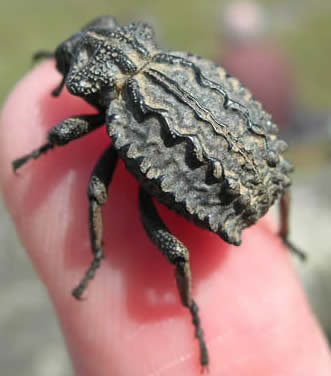
Weevil from Extremadura, of the genus Brachycerus. Amazingly, something very similar was found and photographed on our Central Portugal holiday in April.
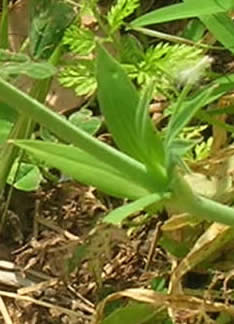
Close up of the leaves of the mystery composite
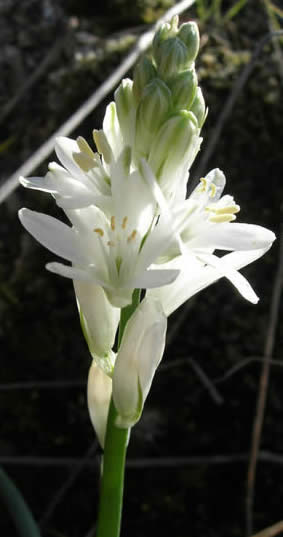
Mystery flowers from the lily family, 22 March 2010
Bug and Ornithogalum photos taken by Chris Durdin
